Archive for the ‘#minturn anglers’ Tag
Hidy Ho Good Neighbors,
One of the perks from guiding is the chance to watch a lot of folks catch and land fish. Explaining to someone that has never fought nor landed a fish properly using a fly rod is like explaining a video game over their shoulder in the heat of the battle. Moves one makes intuitively or by “feel” are born out of experience of landing many fish. As guides, we can flatten that learning curve in a half day provided the fish are eating regularly, and by teaching a few basic principles.
First off, it’s called “angling” for a reason. Landing fish is as much about angles and physics as any part of fly fishing. Your fly rod is a lever (class 3 I think), and also acts as a shock absorb-er. The fly reel not only stores line, but can become a smooth fish slowing drag device. For now, let’s just concentrate on the fly rod angles.
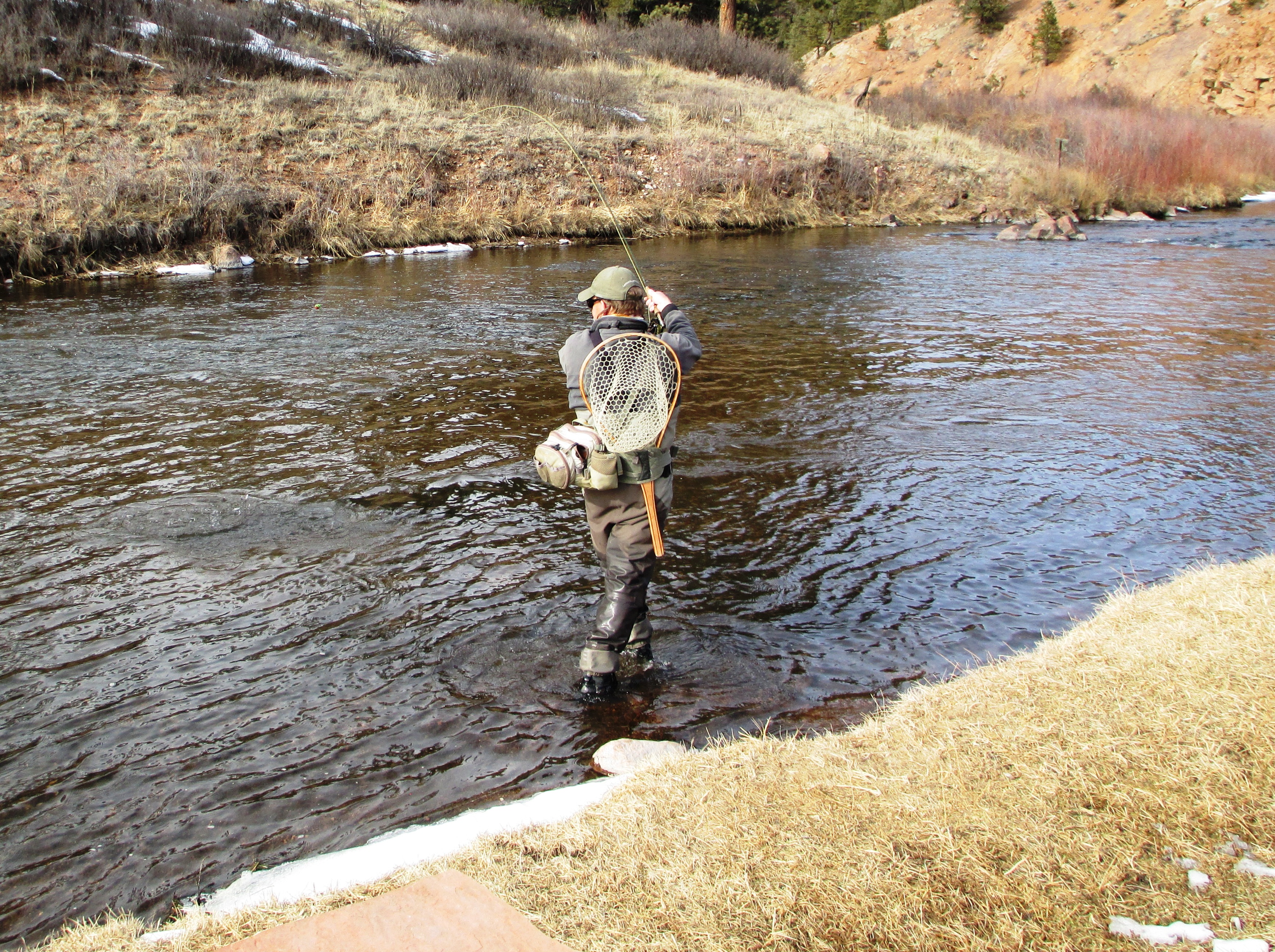
After hook-up, get the fish on the reel as quickly as possible. For those folks that like to “strip” fish in, no worries, I teach folks to get on the reel because it gives them one less thing to think about as they begin to learn proper landing techniques. Once on the reel, get your rod hand thumb as high as your hat brim. At this point, your rod elbow should be pointing toward the fish. Now the fun begins. I always tell folks that “now you’re in a relationship with the fish”. It’s like a dance, move-counter move. Get caught standing still, and you’re date will be gone…..
If the fish “zigs”, you “zag”, keeping constant lateral pressure with the angles of the fly rod. It’s ok, when safe, to move up and down the bank to keep those working angles. As you reel and the fish gets closer, the angle of pressure on the fish should begin to be “over” the fish. In other words, lateral pressure begins to become upward/lateral pressure. This is a critical part of the land job, because as you transition back and forth between lateral and upward pressure, it’s easy to lose proper angles AND put way too much pressure on the fish.
This is what I really want to point out to folks. Imagine that you’re walking your dog. You are not pulling your dog as you control it, you are simply limiting, with positive pressure, where it can go. Think of it this way, if your dog’s leash were to snap during a walk, your leash arm shouldn’t go swinging violently the other direction. This is what I see all the time. A fish will come unbuttoned, and the anglers rod arm goes flying the opposite direction. Improper angles and pressure? Yup.
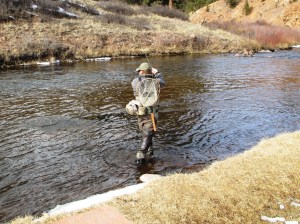
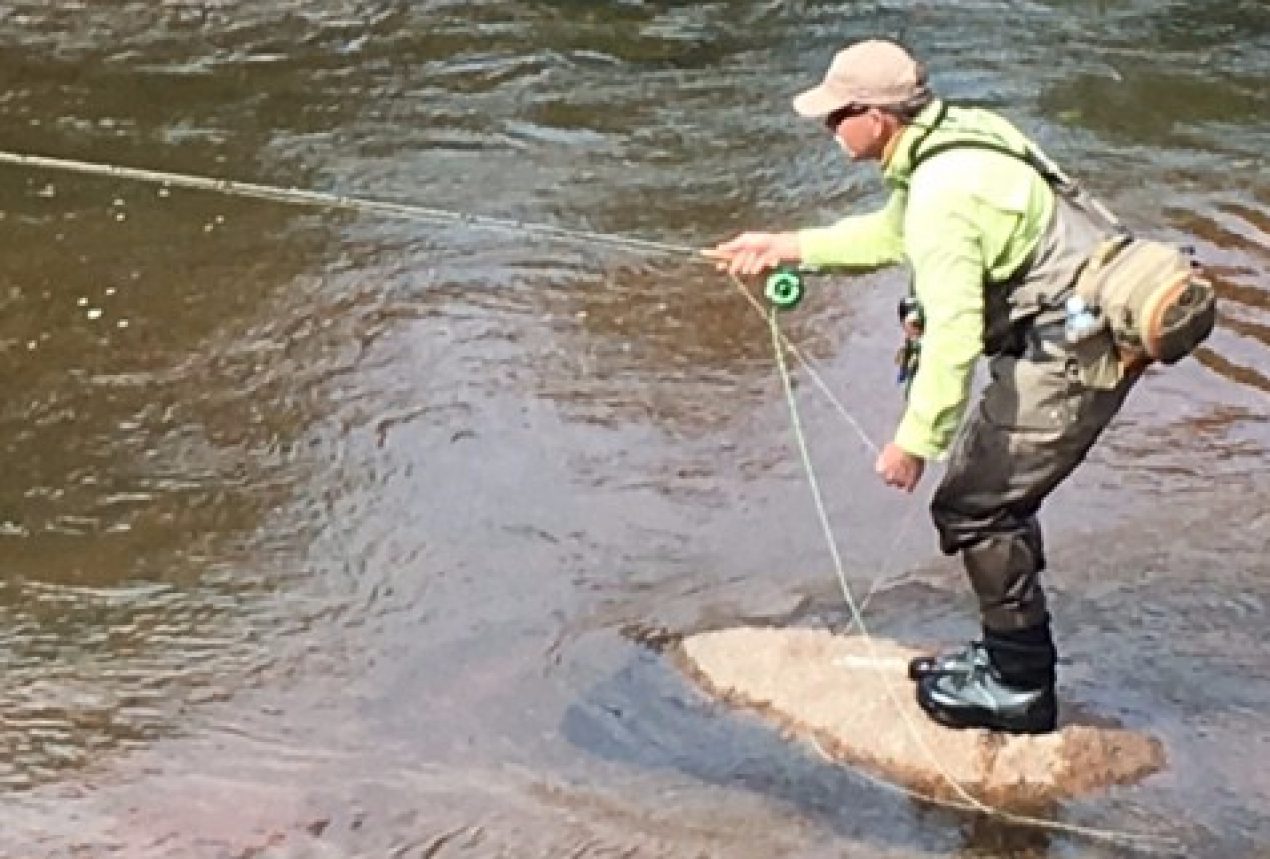
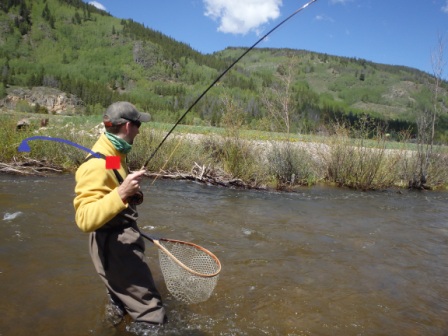
In the far left picture, I am keeping lateral and up pressure during the transition. If that fish came loose the fly rod would react more “up” than away, and toward the bank behind me. The goal is to make that reaction as minimal as possible. That would mean you are using the fly rod angles and pressures perfectly. Look at the picture on the right. This was on a guide trip, and this client had rarely had a fly rod in hand. He was ready to land his own fish by the end of the day. If the fish were to come unbuttoned at the instant the picture was snapped, his reel and hand, if the correct angles and pressure were installed, would move to the red square position. If improper angles and pressures were installed, the the reel would move to the end of the blue line violently. It’s observable on the anglers part, and easily correctable.
Once you get into proper fish-fighting position, the fly rod becomes Harry Potter’s wand. Move it side to side, low to high, near to far. Whatever it takes to keep constant proper pressures. I’ve a “Landing Fish” video on Youtube somewhere, and a link in my archives (somewhere).
As always, feel free to shoot me questions, share this blog link, or contact me if you want to fish.
Fear No Water,
Duane
Guide, Minturn Anglers


I can remember it like it was yesterday. Ten years old, cut-off jeans, Chuck Taylor Hi-tops, and a red t-shirt with one of those little pockets. I was standing knee deep in the Yellowstone river, fiberglass rod, Martin “electric reel”, hand-tied leaders, and I was swinging wet flies to big Cutthroats. Rock and Roll.
Nowadays, most folks have forgotten wet flies in favor of their favorite pattern nymphs or articulated streamers. I’ve no problem with those patterns, but I sure do like throwing the old stuff. They still work.
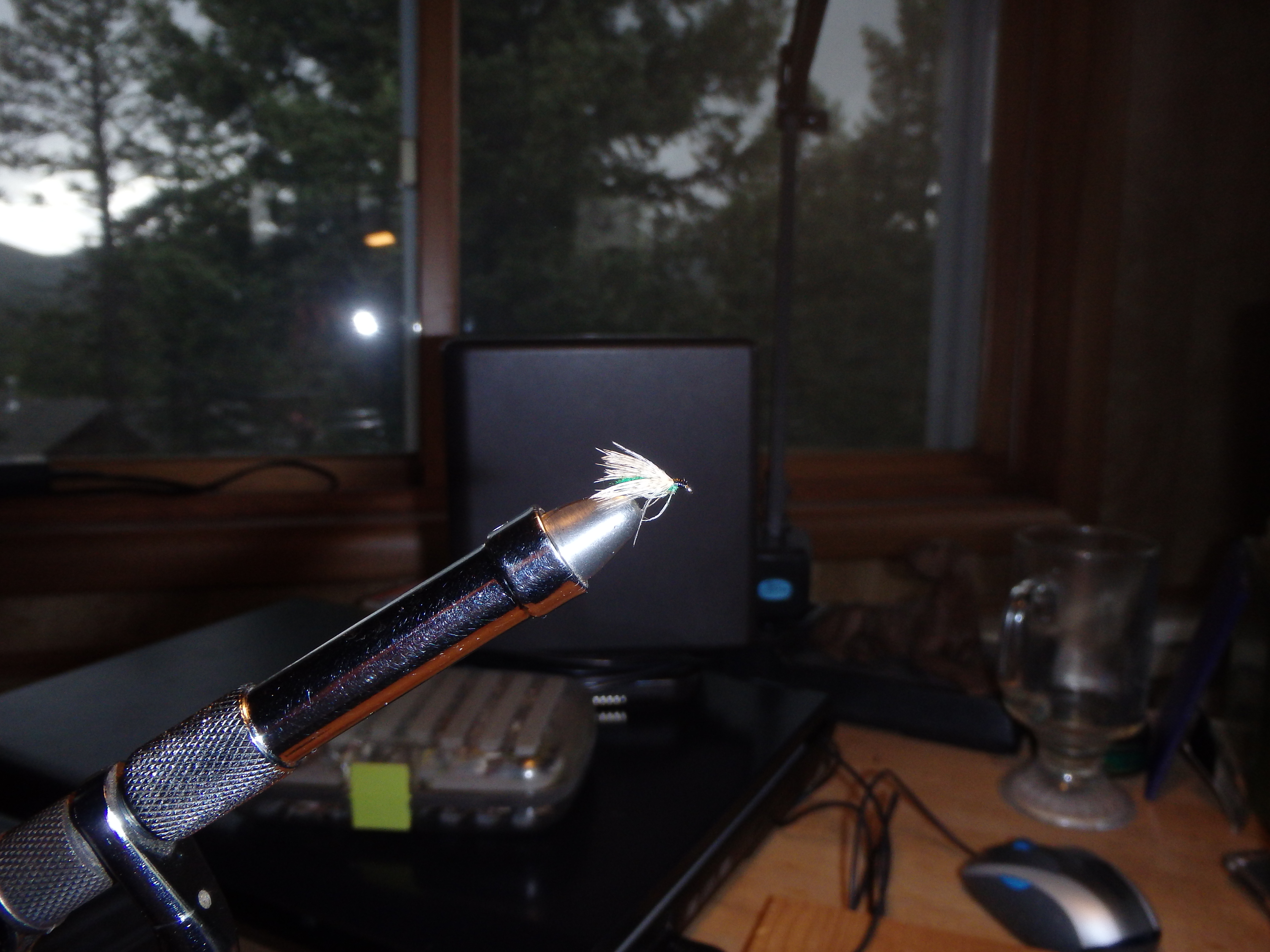
Got back into soft-hackles more than a couple years ago, and most days you will find a soft-hackled pheasant tail in my rig somewhere. Lately, since I’ve been guiding on the Eagle River, I’ve gotten back into the “partridge series” because of the crazy amounts of caddis in that river.
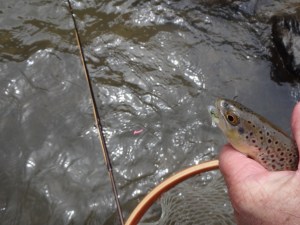
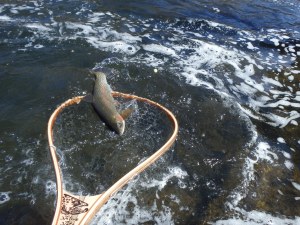
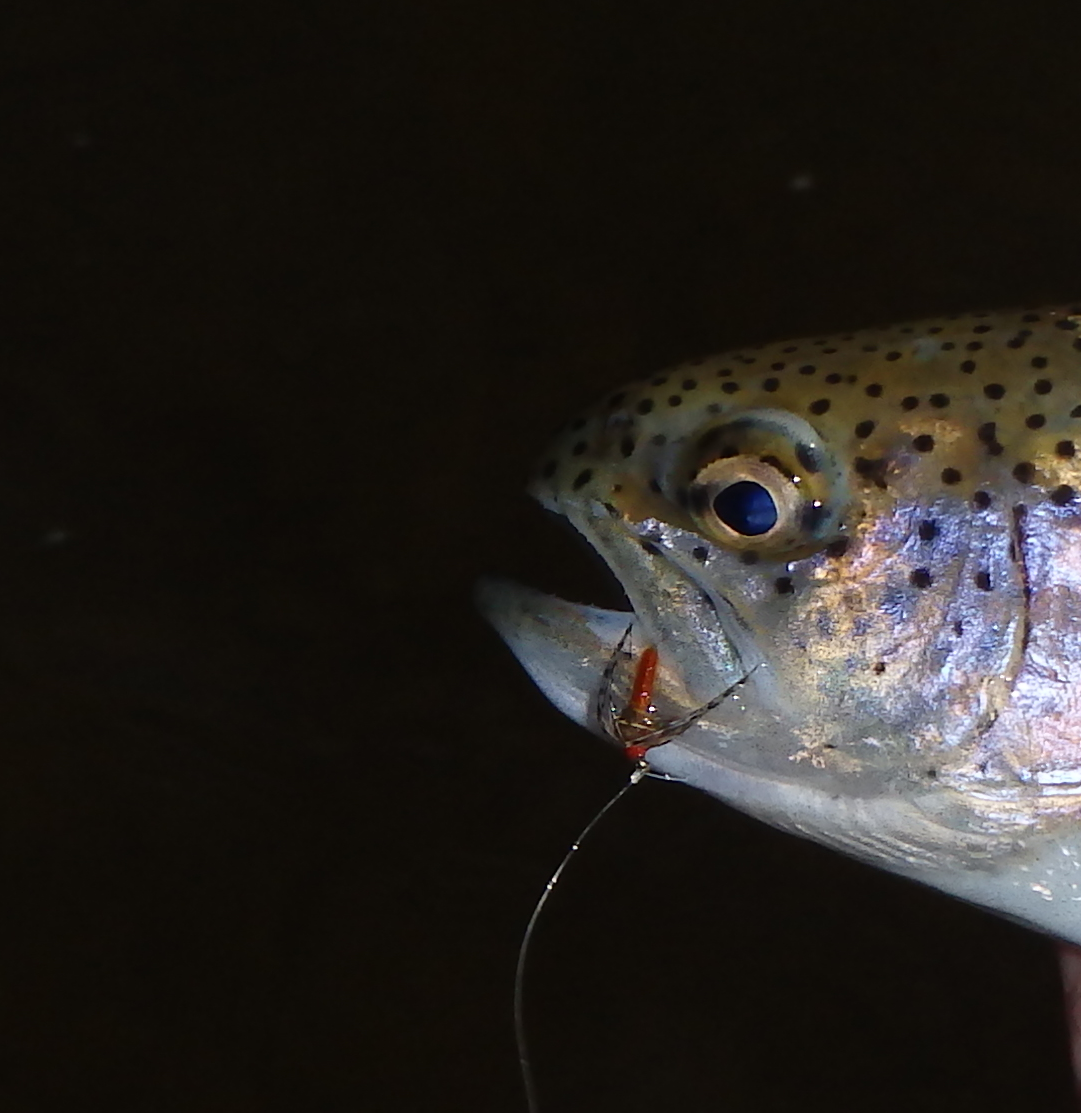
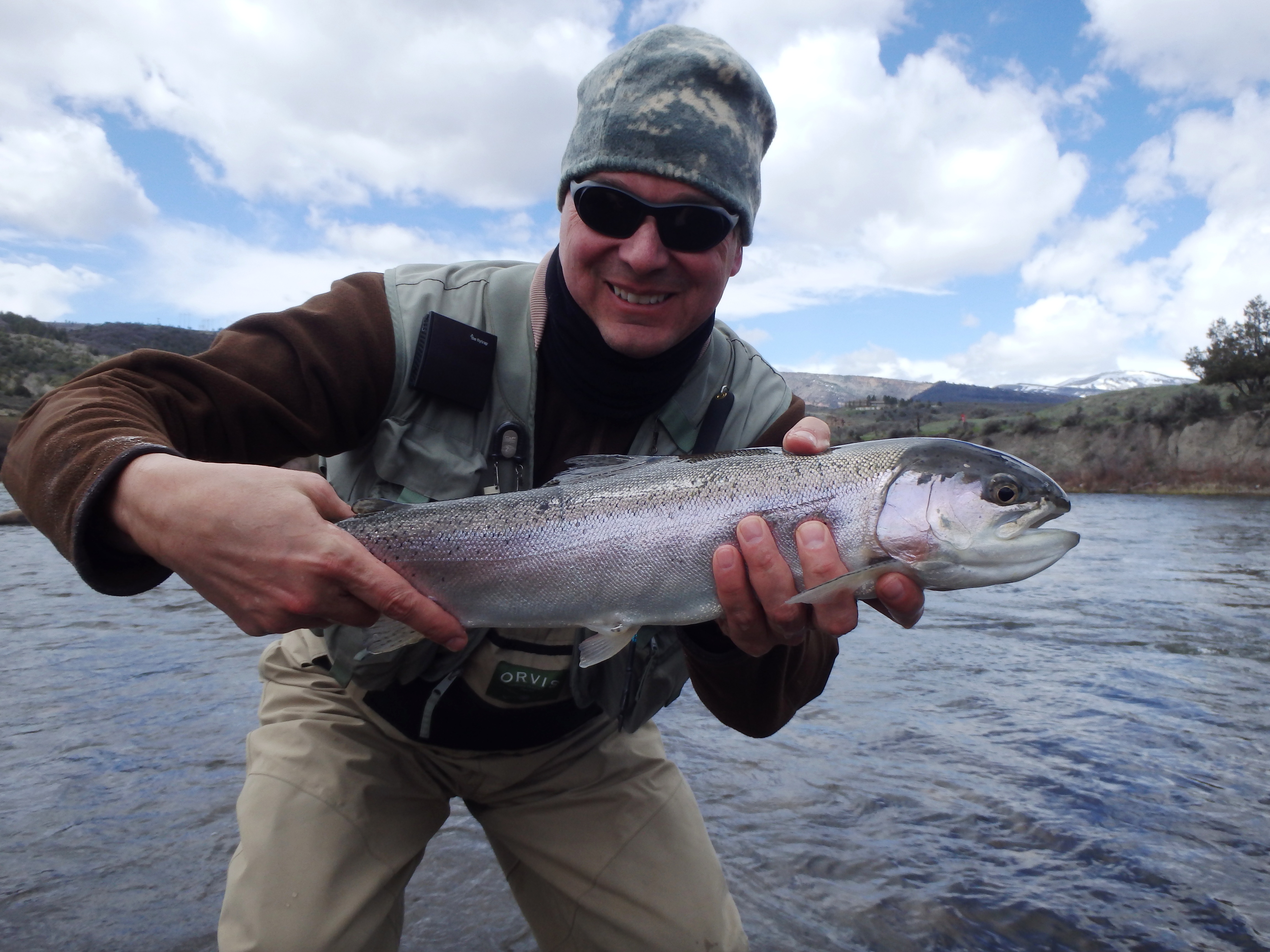
I really like tying into fish with the Partridge and Orange, Partridge and Green, Partridge and Peacock, and Crackleback patterns I fished as a kid. They really mimic caddis pupa and can be dead drifted and swung very effectively. Because of the nature of caddis pupa emergence, these bugs are perfectly suited for the job. My clients love it when a fish eats hard at the end of the drift in the swing phase. The fish pictured ate the Partridge and Orange hard on the swing.
Typically, the bugs are the last or point fly in my 3 bug nymph rig. I do this to accentuate the movement (like roller derby whip for us old folks), and the farther the bug is away from the weight the higher in the column she’ll travel. There are times when I place the bug in the middle position of the rig, and I’ll tie it eye-to-eye to flatten the profile. (a search thru the archives will show eye-to-eye connections, rigs, etc.)
One other trick you can employ is to get upstream of fish feeding on caddis pupa or adults, and strip out enough line to set you up for a swing directly in front of those fish. Employ a classic nymph drift by casting roughly 45 degrees upstream, let the bugs drift drag free for three quarters of the drift, stop your fly rod movement at the three quarter mark, and allow your flies to swing up through the columns and across in front of the fish. Deadly.
Sometimes newer isn’t better, only newer. Give those old patterns a try sometimes, just like that old time rock and roll.
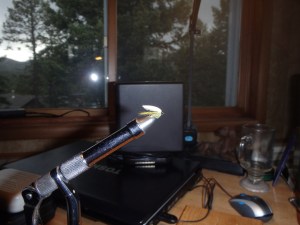
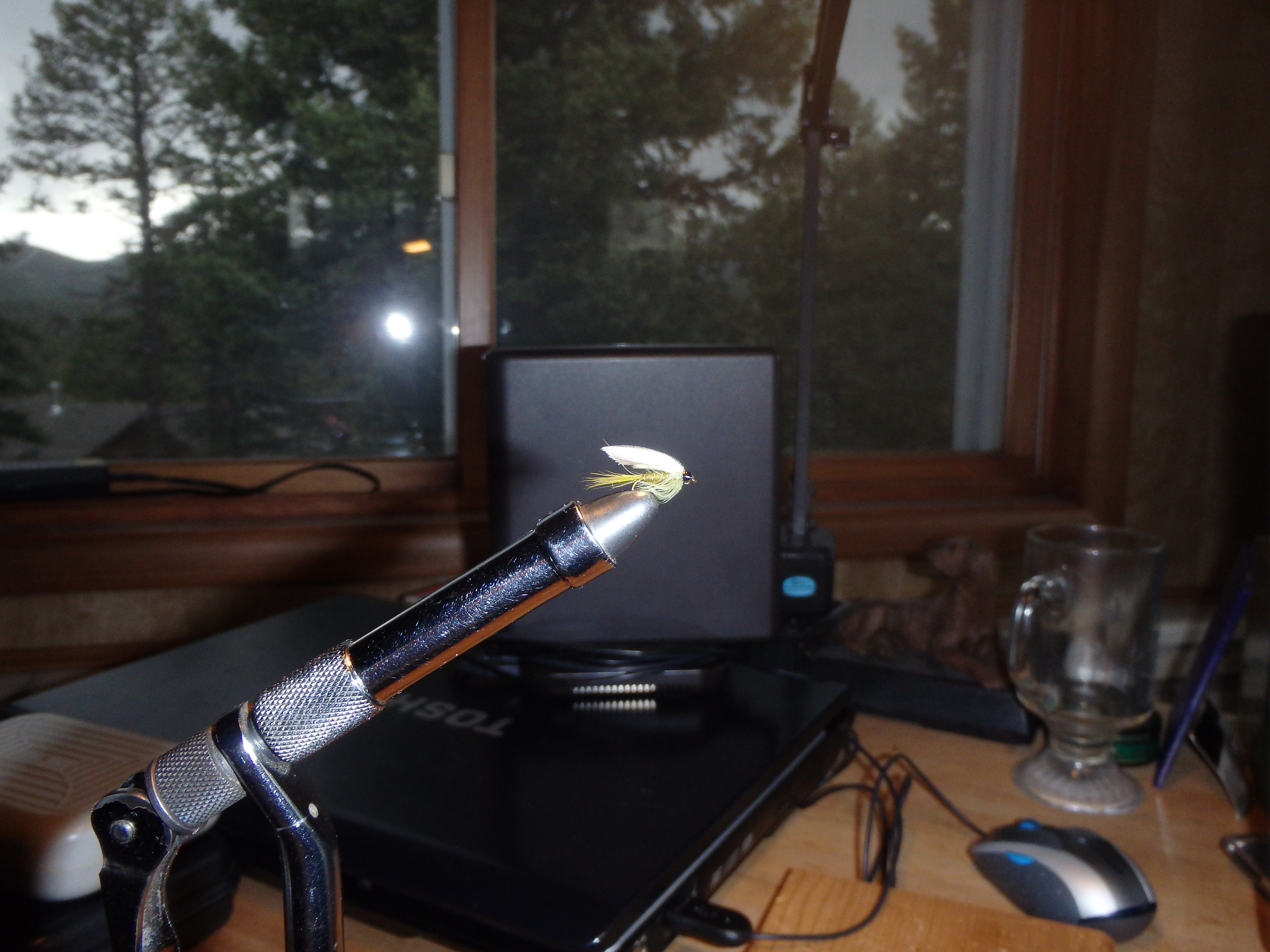
See if you can identify the bugs below……….One is different, but the same idea. Used it hundreds of times.
Fear No Water,
Duane



Hidy Ho Good Neighbors!
I’ve posted a new video http://youtu.be/dcrVPh0qbG8
It deals with the building blocks of a good roll cast, nymph drift, and set. Please feel free to share it with those that are interested. Really enjoy filming on the river.
More films and other stuff is on it’s way. Til then Fear No Water!
Duane

Hidy Ho Good Neighbors!’
My dad used to say, “Even a broken clock is right twice a day”. That was usually in reference to me being right and he being wrong. Don’t remember that happening very often. The reason this comes to mind is because of some events that have taken place in the last week.
By all accounts, the Eagle River by Minturn, has very solid caddis hatches. I love caddis. They force the trout to get aggressive because of their “moth-like” tendencies. When caddis pupate and rise through the water columns, they typically use an air bubble to assist in the ascent. They usually rise fairly fast and depending on the water in which they hatch, they usually hit the surface and flutter off almost immediately. This forces trout to chase them, and try to eat them before they escape, and splashy eats usually result.
You can fish caddis poorly. In other words, the more movement or “skate” you put on the adult imitations, and the amount of “swing” you put on the pupa, the more the fish will attack them. Sure, you can dead drift the larva and pupa and pick up fish, but the real fun comes when you purposely swing the pupa through the columns across the current. I outline several ways to do this In The Fly Fishers Playbook, but one of my favorite techniques is to stop following my indicator with the rod tip about three quarters the way thru the drift. At this point, drag will take over and swing your bugs just like they are pupating. Do the same with the adults on the surface too.
Back to the “broken clock” thought. Sat down the other day, did a bit of research, and came up with a neat caddis pupa designed to match the bugs on the Eagle. Haven’t been to the Eagle yet this week (on it in a couple days), but I couldn’t wait to test the pattern, so I hit Clear Creek during nasty run-off just to check performance. It worked. Love it when a plan comes together.
Even a blind squirrel finds a nut or two…….
Fear No Water,
Duane


Hidy Ho Good Neighbors,
Been a while since I last posted. A lot going on, but that’s not really a good excuse. Truth is I’ve changed fly shops. Not that I didn’t absolutely respect my old fly shop, but I am the kind of person that enjoys a new challenge now and then. I now work for Minturn Anglers in Minturn Colorado. Unbelievable amount of water to guide, and quite frankly, I am being stretched to my limits. You know, I go all over the place giving presentations about fly fishing and because of the “new” water I’m fishing, it’s time for me to prove what I spout about technique is not just smoke.
More often than not, I am given a stretch to fish or someone recommends a stretch to fish, and off I go with clients to make it happen. Just last Sunday I was on Gore Creek as it flows thru Vail. Bob Streb and Joe gave me the boundaries using Google Maps, and as much info as they could. It was up to me to really dig into the how-to’s, what-to’s, and the when-to’s to get my folks on fish. Not ever stepping foot into water that you need to produce fish for folks is more than interesting. That’s a challenge, and I look forward to it!
I always tout the importance of historical, seasonal, and conditional data when it comes down to successfully fly fishing a river for the first time. I have found this idea to be the most important factor in getting clients on fish in unfamiliar waters. If you snoop thru the archives of this blog, you’ll find more info about the data I’m talking about. The techniques are roughly the same, I’m finding that the data is of the utmost importance.
Sure, I may run bugs a bit deeper, or the sizes may be different than what I’m used to, but the chance to pick peoples brains about how a river fishes, at various times of the year is HUGE! I’ve gone from tailwater to freestone fly fishing, if folks don’t think that’s a big shift, then they haven’t been paying attention. This challenge is exactly what I want and need. I am getting better as a guide, getting stretched, and I’m rejuvenated.
All this new information is going into journals and presentations to eventually become my next book project. I’m really excited to get that moving. Folks, all I’m really trying to say is get out there and stretch yourself as a person and an angler. Fish new water, see new sights, meet new people.
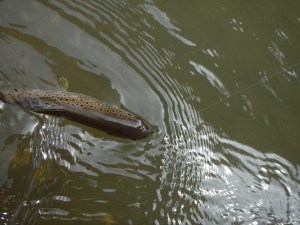
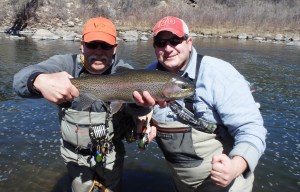
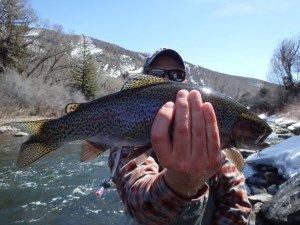
Below are some pictures of folks with nice fish from the Eagle River and Gore Creek……..
FEAR No Water!
Duane








 duaneredford.com
